

Introduction
In today’s digital world, users access websites from a wide range of devices, including smartphones, tablets, laptops, desktops, and even smart TVs. Because of this shift in browsing behavior, businesses can no longer rely on websites that are designed only for desktop screens. A modern website must deliver a seamless experience regardless of the device being used. This is where responsive web design services become essential.
A responsive website automatically adapts its layout, images, content, and navigation to fit different screen sizes. Instead of creating separate websites for desktop and mobile users, businesses can maintain a single website that functions perfectly across all devices. This approach improves usability, enhances customer satisfaction, and supports better business outcomes.
As competition continues to grow online, user experience has become one of the most important factors influencing website success. Visitors expect websites to load quickly, look professional, and function smoothly. If a website fails to meet these expectations, users are likely to leave and visit a competitor. Responsive web design helps prevent these issues by ensuring consistency and accessibility across all platforms.
This article explores the importance of responsive web design services, their benefits, essential features, business impact, and why investing in professional responsive design is a smart decision for long-term growth.
What Are Responsive Web Design Services?
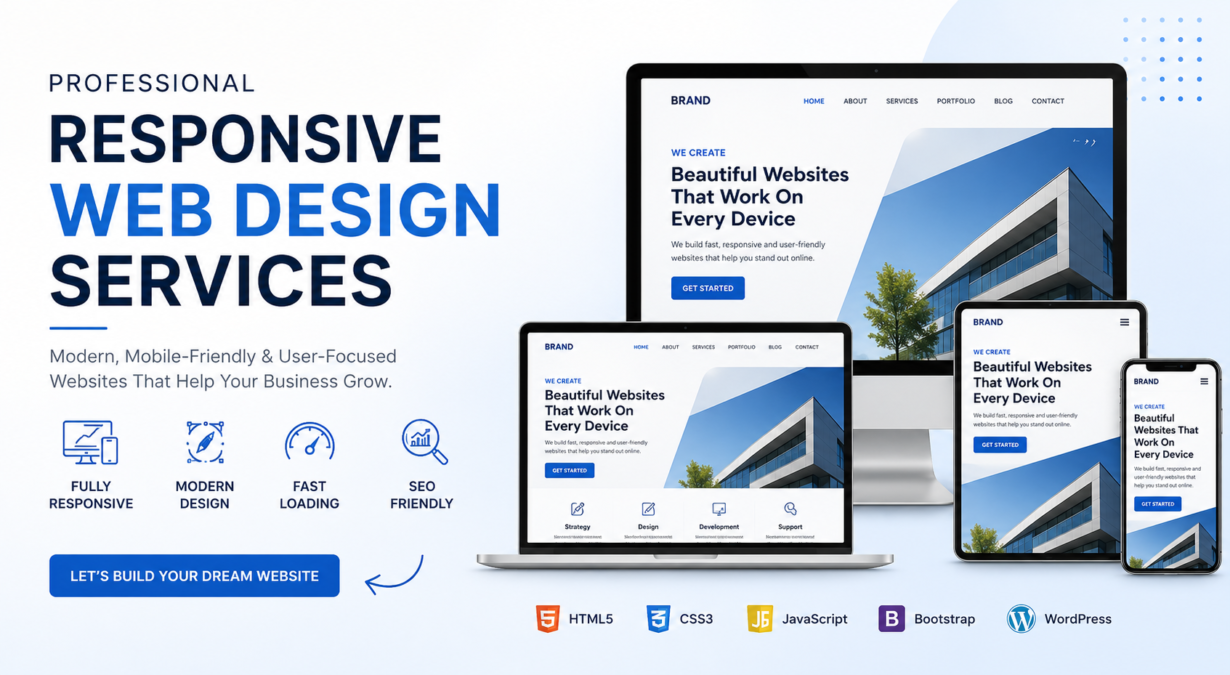
Responsive web design services refer to the process of designing and developing websites that automatically adjust to different screen sizes and devices. Rather than creating multiple versions of a website, responsive design uses flexible layouts, scalable images, and adaptive coding techniques to provide a consistent experience for every visitor.
The concept is based on flexibility. Whether someone visits a website using a smartphone while traveling or accesses it from a desktop computer in an office, the website adjusts itself to deliver the best possible viewing experience. Text remains readable, navigation stays accessible, and images display correctly without requiring excessive zooming or scrolling.
Professional responsive web design services involve more than simply making a website fit smaller screens. Designers carefully analyze user behavior, content structure, navigation patterns, and performance requirements. The goal is to create a user-friendly environment that encourages engagement and improves conversions.
Modern responsive design also focuses on maintaining visual consistency across devices. Businesses need their brand identity, messaging, and overall presentation to remain professional regardless of screen size. A properly designed responsive website ensures that every visitor receives the same high-quality experience.
Why Responsive Web Design Matters More Than Ever
The rapid growth of mobile internet usage has responsive web design services transformed the way people interact with websites. Mobile devices now account for a significant portion of global web traffic, making mobile-friendly design a necessity rather than an option.
Users expect websites to work flawlessly on any device. When a website fails to adapt properly, visitors often encounter problems such as distorted layouts, tiny text, broken navigation menus, and slow loading times. These frustrations lead to higher bounce rates and lost business opportunities.
Search engines also prioritize mobile-friendly websites. Responsive design plays an important role in search engine optimization because search engines aim to provide users with the best possible experience. Websites that perform well on mobile devices often achieve better rankings and increased visibility.
Additionally, customer trust is heavily influenced by website quality. A professional, responsive website creates a positive first impression and demonstrates that a business values its audience. In contrast, an outdated website can damage credibility and discourage potential customers from engaging further.
As technology continues evolving, businesses need websites that can adapt to new devices and user expectations. Responsive web design provides the flexibility necessary to stay competitive in a constantly changing digital environment.
Key Features of Professional Responsive Web Design Services
Professional responsive web design services incorporate several important features that contribute to a seamless user experience. These elements work together to ensure optimal functionality across devices.
One of the most important features is flexible grid layouts. Instead of using fixed-width structures, responsive websites utilize fluid grids that automatically resize based on screen dimensions. This approach allows content to remain organized and visually appealing regardless of device size.
Another critical component is responsive images. Images are optimized to scale appropriately without losing quality or affecting website performance. Proper image handling ensures that users receive clear visuals while maintaining fast loading speeds.
Responsive navigation is equally important. Mobile users require intuitive menus that are easy to access and operate. Designers often implement collapsible menus, touch-friendly buttons, and simplified navigation systems to improve usability on smaller screens.
Performance optimization is another key feature. Responsive websites are designed to load quickly by minimizing unnecessary code, optimizing media files, and implementing efficient development practices. Faster loading times improve user satisfaction and contribute to higher search engine rankings.
Testing across multiple devices and browsers is also a standard part of professional responsive web design services. This ensures that the website functions correctly regardless of operating system, browser, or screen size.
Benefits of Responsive Web Design Services for Businesses
Investing in responsive web design services offers numerous advantages that directly impact business performance. One of the most significant benefits is improved user experience. Visitors are more likely to engage with a website that is easy to navigate and visually appealing on any device.
Higher conversion rates are another major advantage. When users can easily browse products, complete forms, or make purchases without frustration, they are more likely to take desired actions. Responsive design removes barriers that may otherwise prevent conversions.
Cost efficiency is also an important factor. Maintaining separate desktop and mobile websites can be expensive and time-consuming. Responsive design allows businesses to manage a single website, reducing development and maintenance costs.
Improved search engine visibility is another valuable benefit. Search engines favor websites that provide excellent mobile experiences. Responsive design supports SEO efforts by creating a consistent structure that is easier for search engines to crawl and index.
Brand consistency is strengthened through responsive design as well. A unified presentation across all devices helps businesses establish a professional image and reinforce brand recognition among users.
Furthermore, responsive websites are better prepared for future technological changes. As new devices and screen sizes emerge, responsive design frameworks can adapt more easily than fixed layouts.
How Responsive Web Design Improves User Experience
User experience is one of the most important factors influencing website success. Responsive web design services focus heavily on creating positive interactions between users and websites.
When visitors access a responsive website, they immediately notice the convenience of a layout that fits their screen. They do not need to zoom in, scroll horizontally, or struggle with navigation elements. Everything is presented clearly and logically.
Consistency across devices also enhances user experience. A customer who starts browsing on a smartphone and later continues on a desktop computer encounters the same branding, content, and functionality. This continuity creates a smoother customer journey.
Accessibility is another important aspect of user experience. Responsive design helps ensure that content remains readable and usable for a wider audience. Clear typography, appropriate spacing, and touch-friendly controls make websites more accessible to diverse user groups.
Fast loading speeds further contribute to positive experiences. Modern users have little patience for slow websites. Responsive design incorporates optimization techniques that reduce load times and improve overall performance.
Ultimately, a positive user experience encourages visitors to spend more time on a website, explore additional pages, and engage more deeply with a business.
The Relationship Between Responsive Web Design and SEO
Search engine optimization and responsive web design are closely connected. A well-designed responsive website supports numerous SEO factors that contribute to higher search rankings.
One major advantage is mobile friendliness. Search engines prioritize mobile-first indexing, meaning they primarily evaluate the mobile version of a website when determining rankings. Responsive websites are naturally aligned with this approach.
Page speed is another critical SEO factor. Responsive web design services often include performance optimization measures that improve loading times. Faster websites tend to rank better and provide superior user experiences.
Lower bounce rates can also positively influence SEO performance. When users find a website easy to navigate and visually appealing, they are more likely to stay and interact with content. This increased engagement sends positive signals to search engines.
Responsive design simplifies website management as well. Having a single URL structure for all devices eliminates duplicate content concerns and makes indexing more efficient.
Additionally, responsive websites often earn more backlinks and social shares because users can easily access and share content from any device. These factors contribute to stronger search visibility and long-term SEO success.
Choosing the Right Responsive Web Design Service Provider
Selecting the right provider is crucial for achieving the best results from responsive web design services. Businesses should begin by evaluating a provider’s experience and portfolio. Previous projects offer valuable insight into design quality, technical capabilities, and industry expertise.
Communication is another important consideration. A reliable provider takes the time to understand business goals, target audiences, and unique requirements. Effective collaboration leads to better outcomes and fewer misunderstandings during development.
Technical expertise should also be carefully assessed. The provider should have experience with modern design frameworks, performance optimization, mobile usability, and SEO best practices. A strong technical foundation ensures long-term website success.
Customization capabilities are equally important. Every business has unique objectives and branding requirements. The best responsive web design services deliver tailored solutions rather than relying solely on generic templates.
Ongoing support and maintenance should not be overlooked. Websites require updates, monitoring, and occasional improvements. Working with a provider that offers continued support can help maintain optimal performance over time.
Finally, businesses should consider overall value rather than focusing exclusively on cost. Investing in quality design often delivers greater returns through improved user engagement, conversions, and search visibility.
Future Trends in Responsive Web Design
Responsive web design continues to evolve as technology advances and user expectations change. One emerging trend is the increasing use of artificial intelligence to personalize website experiences. AI-driven systems can adapt content and layouts based on user behavior and preferences.
Voice search optimization is becoming more important as voice-enabled devices gain popularity. Responsive websites will increasingly incorporate features that support voice-based interactions and searches.
Progressive web applications are another significant trend. These applications combine the functionality of mobile apps with the accessibility of websites, creating faster and more engaging experiences for users.
Minimalist design approaches are also gaining traction. Clean layouts, simplified navigation, and focused content help improve usability and performance across devices.
Enhanced accessibility standards will continue shaping responsive design practices as businesses strive to create inclusive experiences for all users. This includes improved keyboard navigation, screen reader compatibility, and better visual contrast.
As digital technologies continue evolving, responsive web design services will remain a critical component of successful online strategies.
Conclusion
Responsive web design services have become an essential investment for businesses seeking long-term online success. In a world where users access websites through a variety of devices, delivering a consistent and enjoyable experience is no longer optional.
A responsive website improves usability, supports search engine optimization, strengthens brand credibility, and increases conversion opportunities. By adapting seamlessly to different screen sizes, responsive design ensures that every visitor receives the best possible experience.
Professional responsive web design services combine technical expertise, strategic planning, and user-focused design principles to create websites that perform effectively across all devices. Businesses that prioritize responsive design position themselves for greater visibility, stronger customer engagement, and sustainable growth.
As digital trends continue to evolve, responsive design will remain one of the most important foundations of successful web development. Organizations that invest in high-quality responsive web design today will be better equipped to meet the demands of tomorrow’s online audience.