
Japandi interior design has quickly become one of the most sought-after home décor styles in recent years. Blending the timeless elegance of Japanese aesthetics with the cozy simplicity of Scandinavian design, japandi interior design offers a harmonious balance between function and beauty. It appeals to homeowners who crave calm, clutter-free spaces without sacrificing warmth or personality.
At its core, japandi interior design celebrates minimalism, craftsmanship, and intentional living. It is not about empty rooms or cold spaces. Instead, it focuses on thoughtful curation, natural materials, and subtle details that create a peaceful atmosphere. If you’re looking to transform your home into a sanctuary that feels both modern and inviting, japandi interior design may be the perfect choice.
In this comprehensive guide, you’ll learn what defines japandi interior design, how to apply it room by room, which materials and colors work best, and why this hybrid style continues to resonate with modern homeowners.
What Is Japandi Interior Design?
Japandi interior design is a fusion of Japanese minimalism and Scandinavian functionality. While these two design philosophies originate from different parts of the world, they share similar values. Both emphasize simplicity, craftsmanship, and a strong connection to nature.
Japanese design philosophy draws heavily from concepts such as wabi-sabi, which embraces imperfection and natural beauty. Scandinavian interiors, on the other hand, prioritize comfort, practicality, and clean lines. When combined, japandi interior design creates spaces that feel grounded, refined, and effortlessly stylish.
Unlike overly decorative styles, japandi interior design avoids excess. It favors meaningful pieces over mass-produced clutter. Every object serves a purpose, whether functional or emotional. This intentional approach makes it ideal for those who want their homes to feel calm and organized.
The Core Principles of Japandi Interior Design
Understanding the foundation of japandi interior design helps you implement it authentically rather than simply copying surface-level trends.
Minimalism with Warmth
Minimalism in japandi interior design does not mean stark or lifeless spaces. It means reducing distractions while maintaining warmth. Scandinavian hygge influences add comfort through textiles, soft lighting, and natural textures.
Instead of bare white walls and empty corners, japandi interior design layers subtle elements like linen curtains, woven rugs, and handcrafted ceramics.
Natural Materials
Natural materials are essential in japandi interior design. Wood, bamboo, stone, linen, cotton, and clay dominate the palette. These materials create tactile richness without visual clutter.
Light woods such as oak and ash reflect Scandinavian influence, while darker tones like walnut and black-stained wood nod to Japanese interiors. The mix creates contrast while maintaining harmony.
Neutral and Earthy Color Palette
Japandi interior design typically relies on muted tones. Soft whites, warm beiges, taupe, charcoal, and muted greens form the base. These colors promote relaxation and help natural materials stand out.
Rather than bold or flashy accents, japandi interior design uses subtle contrasts. A matte black lamp against a beige wall or a dark wooden coffee table on a light rug adds quiet sophistication.
Functional Beauty
Functionality plays a major role in japandi interior design. Furniture should be practical, ergonomic, and visually simple. Clean lines, low profiles, and uncluttered silhouettes define the look.
Each piece should justify its presence. If something does not serve a purpose or bring joy, it does not belong in a japandi interior design scheme.
How to Apply Japandi Interior Design in Your Home
Creating a cohesive japandi interior design look requires thoughtful planning. It is about layering textures and maintaining visual calm.
Living Room Transformation
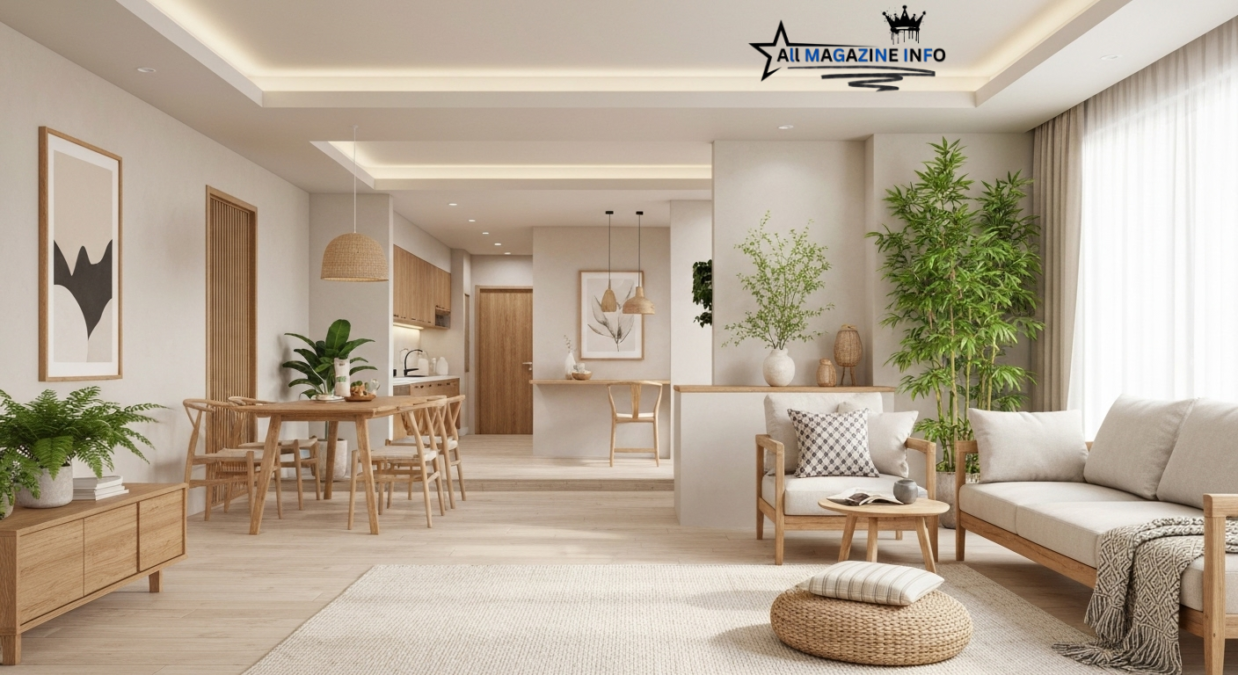
In the living room, start with a neutral base. Choose a low-profile sofa in a soft linen or cotton fabric. Keep colors muted, such as warm gray or cream.
Add a wooden coffee table with simple lines. Avoid ornate carvings or glossy finishes. Japandi interior design thrives on matte textures and natural grains.
Incorporate soft lighting through paper lantern-style lamps or minimalist floor lamps. Warm lighting enhances the cozy aspect while maintaining serenity.
Decor should remain minimal. A handcrafted ceramic vase or a single large plant can be enough to complete the space.
Bedroom Serenity
Japandi interior design is particularly effective in bedrooms because of its calming nature. Opt for a low platform bed with a wooden frame. Keep bedding simple with neutral tones and high-quality natural fabrics.
Instead of multiple decorative pillows, choose a few well-made cushions in complementary shades. Add texture with a woven throw or linen blanket.
Declutter surfaces. Nightstands should hold only essentials such as a lamp and perhaps a book. The simplicity reinforces relaxation.
Kitchen and Dining Spaces
In kitchens, japandi interior design often features flat-panel cabinets in natural wood or soft matte finishes. Open shelving works well if styled sparingly with ceramics and glassware.
Dining tables should be sturdy yet simple. Pair them with minimalist chairs in wood or upholstered in neutral fabric.
Plants and natural light enhance the organic feel of japandi interior design in these areas.
Choosing Furniture for Japandi Interior Design
Furniture selection is critical when implementing japandi interior design. Pieces should have clean lines and understated elegance.
Look for craftsmanship over trendiness. Solid wood furniture with visible grain is ideal. Avoid overly decorative hardware or shiny finishes.
Low-height furniture is common in japandi interior design, reflecting Japanese influence. Coffee tables, beds, and seating often sit closer to the ground, creating a grounded and balanced environment.
Mixing Scandinavian light woods with darker Japanese-inspired tones creates depth while staying cohesive.
Lighting in Japandi Interior Design
Lighting shapes the mood of any space, and japandi interior design relies on soft, warm illumination.
Natural light is a priority. Keep window treatments minimal to allow sunlight to flow freely. Linen curtains or bamboo blinds work well.
For artificial lighting, choose warm bulbs. Paper lantern pendants, simple metal floor lamps, and wooden table lamps align beautifully with japandi interior design principles.
Layer lighting rather than relying on a single overhead fixture. This approach adds dimension without clutter.
Textures and Décor Details
Japandi interior design is subtle, but texture plays a powerful role. Woven rugs, linen upholstery, and handcrafted ceramics add character without overwhelming the space.
Decor should be meaningful. A single piece of art with muted tones or a handmade bowl can serve as a focal point. Avoid gallery walls filled with busy patterns.
Indoor plants are also popular in japandi interior design. Choose simple greenery like a fiddle-leaf fig or a bonsai tree to reinforce the natural theme.
Why Japandi Interior Design Is So Popular
Japandi interior design resonates with modern lifestyles because it promotes calm in a fast-paced world. With increasing remote work and digital distractions, homeowners crave serene environments.
This design style also aligns with sustainable values. Natural materials, timeless furniture, and mindful purchasing reduce waste and encourage longevity.
Social media platforms have amplified the appeal of japandi interior design, but its lasting popularity stems from its practicality and emotional comfort.
Common Mistakes to Avoid
While japandi interior design emphasizes minimalism, going too minimal can make a space feel cold. Balance simplicity with warmth through textiles and lighting.
Another mistake is mixing too many styles. Japandi interior design should feel cohesive. Introducing overly industrial or glam elements disrupts harmony.
Lastly, avoid clutter. Even beautiful objects can overwhelm a japandi interior design space if there are too many.
How Japandi Interior Design Supports Well-Being
The philosophy behind japandi interior design promotes mindfulness and intentional living. Decluttered spaces reduce stress and enhance focus.
Natural materials connect occupants to nature, which research consistently links to improved mental well-being. Soft color palettes calm the nervous system and create restorative environments.
By encouraging thoughtful consumption, japandi interior design also fosters a more sustainable lifestyle.
Conclusion
Japandi interior design is more than a trend. It is a philosophy that merges Japanese elegance with Scandinavian functionality to create calm, purposeful spaces. Through natural materials, neutral palettes, clean lines, and mindful curation, japandi interior design transforms homes into peaceful sanctuaries.
Whether you are redesigning a single room or your entire home, embracing japandi interior design can help you achieve balance, warmth, and simplicity. By focusing on quality over quantity and harmony over excess, you create a timeless interior that feels both modern and deeply comforting.
FAQs About Japandi Interior Design
What is japandi interior design in simple terms?
Japandi interior design is a blend of Japanese minimalism and Scandinavian functionality. It combines clean lines, natural materials, and cozy elements to create calm, clutter-free spaces.
What colors are used in japandi interior design?
Japandi interior design typically uses neutral and earthy tones such as beige, warm white, soft gray, muted green, and charcoal. These colors create a serene and balanced atmosphere.
Is japandi interior design expensive?
Japandi interior design does not have to be expensive. While it values quality craftsmanship, you can achieve the look by investing in fewer, high-quality pieces rather than many decorative items.
How is japandi interior design different from minimalism?
While minimalism focuses strictly on simplicity, japandi interior design blends simplicity with warmth and texture. It avoids cold or sterile spaces by incorporating cozy textiles and natural materials.
Can small apartments use japandi interior design?
Yes, japandi interior design works beautifully in small spaces. Its focus on decluttering, functional furniture, and light color palettes makes rooms feel more open and peaceful.
You may also read
Houzz Promo Code: How to Save Big on Home Design and Furniture