
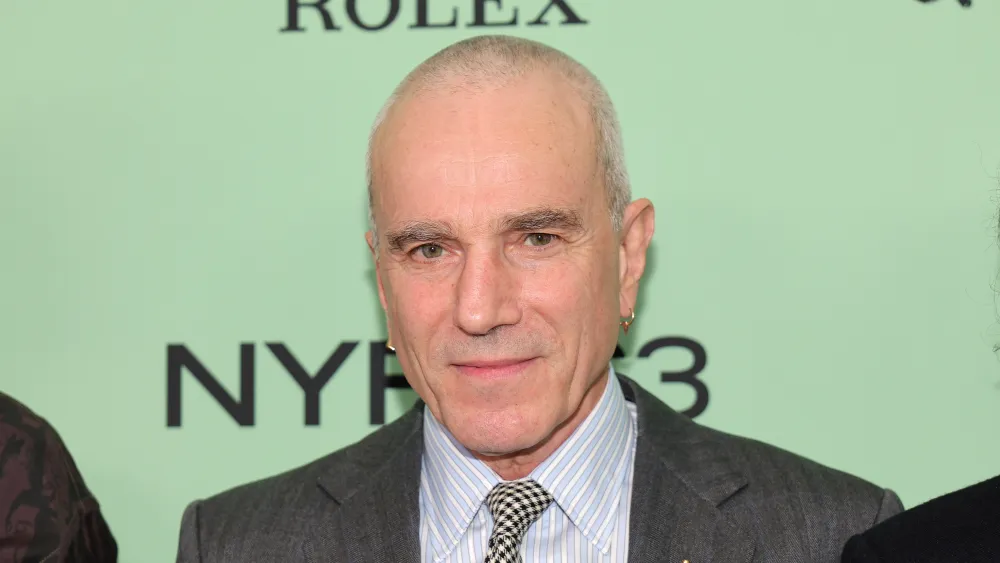

Daniel Day-Lewis built his reputation by vanishing. He disappeared into Abraham Lincoln’s stooped frame, Christy Brown’s restricted movements and Daniel Plainview’s furious ambition. He also disappeared between films, sometimes for years, while other leading actors fought to remain visible. His absences became nearly as famous as his performances.
The popular version of Day-Lewis presents him as an intimidating Method actor who remains trapped inside each character until filming ends. That description contains some truth, but it reduces a thoughtful creative process to a collection of extreme anecdotes. His preparation was demanding, yet it also involved curiosity, play and an intense interest in practical skills. Accents, clothing, tools and physical routines gave him a route into lives far removed from his own.
Day-Lewis has also resisted the machinery surrounding acting. He rarely promotes his private life, maintains long gaps between projects and has repeatedly considered leaving the profession. After formally retiring in 2017, he returned eight years later for Anemone, a film he wrote with his son Ronan. The comeback did not contradict his earlier behaviour. It continued a lifelong rhythm of immersion, withdrawal and rediscovery.
His story therefore stretches far beyond three Academy Awards. It includes a rebellious London childhood, a theatrical crisis during Hamlet, an apprenticeship with a Florentine shoemaker and a family history connecting British poetry with British cinema. These details reveal an artist who found freedom not through fame, but through concentration.
The Boy Who Learnt to Disappear
Daniel Michael Blake Day-Lewis was born in London on 29 April 1957 into a family already surrounded by culture. His father, Cecil Day-Lewis, wrote poetry, detective novels and criticism before becoming Poet Laureate in 1968. His mother, Jill Balcon, worked as an actress in theatre, radio and film. Artistic achievement was not an abstract ambition in their household; it formed part of its daily language.
His maternal grandfather added another formidable connection. Sir Michael Balcon had led Ealing Studios during its celebrated period and helped develop films including Kind Hearts and Coronets, The Lavender Hill Mob and The Man in the White Suit. Day-Lewis was therefore the grandson of an influential British film producer, yet he did not grow up treating cinema as a family business waiting for him.
His childhood in Greenwich exposed him to a less comfortable form of performance. Local children reportedly mocked him for being both “posh” and Jewish, prompting him to study their speech and behaviour. He learnt the local accent, altered his mannerisms and discovered that changing how he spoke could change how others responded to him. He later identified this adaptation as an early acting lesson.
His behaviour during those years did not fit the image of a solemn future knight. Day-Lewis has spoken about shoplifting and other minor offences, describing himself as unruly and difficult to control. His parents eventually sent him to Sevenoaks School in Kent, but he disliked the institution and transferred to Bedales after two years.
His boarding-school education introduced him to three interests that would follow him into adulthood: acting, woodworking and fishing. Acting offered transformation, while the other two demanded patience and attention without an audience. The split between public performance and private craftsmanship appeared early.
His first film appearance hardly announced the arrival of a distinguished classical actor. At 13, Day-Lewis appeared briefly as an uncredited vandal in John Schlesinger’s Sunday Bloody Sunday. His task involved damaging an expensive car, for which he was paid a small fee. He later remembered the experience with amusement, partly because the work turned destructive behaviour into legitimate employment.
His father’s death in 1972 brought a sharper break. Cecil Day-Lewis died when Daniel was 15, leaving his son to negotiate both personal grief and an intimidating artistic inheritance. The father’s poems, public status and Irish roots remained part of Daniel’s life long after the loss.
His initial career ambition centred on craft rather than performance. Day-Lewis applied for a cabinetmaker’s apprenticeship but was rejected because he lacked sufficient experience. Acting then became the practical alternative, leading him to the Bristol Old Vic Theatre School. The decision sounds casual in retrospect, although it directed him towards a profession that would demand the same precision he admired in skilled manual work.
His training at Bristol Old Vic was conventional and rigorous. Day-Lewis learnt movement, voice and classical text before working with organisations including the Royal Shakespeare Company. His later reputation for private rituals sometimes obscured this foundation. He did not invent his technique in isolation; he began with disciplined theatrical training and gradually developed his own way of using it.
The Night Hamlet Became Too Personal
Day-Lewis’s stage career ended during one of theatre’s most psychologically demanding roles. In 1989, he played Hamlet at the National Theatre in London under the direction of Richard Eyre. Reviews recognised the force of his performance, but the production placed him under severe emotional and physical pressure.
The decisive moment came during a September performance. Day-Lewis broke down in the scene involving the ghost of Hamlet’s murdered father, left the stage and did not return. Actor Jeremy Northam completed the performance, while Ian Charleson subsequently took over the role. Day-Lewis has not appeared in a stage production since.
The incident quickly acquired a supernatural explanation. Reports claimed that Day-Lewis had seen the ghost of Cecil Day-Lewis while performing. The idea fitted his intense reputation so neatly that it became one of the most repeated stories about him.
Day-Lewis later gave the episode a more complicated meaning. He did not describe a straightforward paranormal sighting. Instead, he explained that performing Hamlet required him to investigate his own experience of grief, so his father’s presence entered the work each night. The “ghost” functioned more as an emotional truth than a literal apparition.
The distinction matters because it shows how celebrity stories become simplified. A performer reaches emotional exhaustion; the press turns that exhaustion into a dramatic vision; repetition then makes the vision sound factual. Day-Lewis’s reserve allowed the more sensational account to survive largely unchallenged.
His departure also revealed the limits of immersion. Theatre gives actors little distance from a role because they must repeat the same emotional journey in front of a live audience, often eight times a week. Film fragments that journey into separate shots. Day-Lewis could prepare deeply for cinema while knowing that each scene would eventually end.
His move away from the stage did not immediately reduce his workload. Day-Lewis had already attracted attention by playing two sharply different men in films released close together in 1985. In My Beautiful Laundrette, he played Johnny, a gay former National Front sympathiser in contemporary London. In A Room with a View, he appeared as the stiff, socially awkward Cecil Vyse. Viewers could easily fail to recognise the same actor.
His transformation in My Left Foot then changed his career. Day-Lewis played Irish writer and painter Christy Brown, who was born with cerebral palsy and used his left foot to write and create art. Day-Lewis trained his body carefully and learnt to paint and write with his foot, approaching Brown’s movements through gradual physical study rather than imitation.
The performance brought Day-Lewis his first Academy Award for Best Actor in 1990. It also helped create the public character that followed him: the actor who would accept almost any discomfort for a role. Stories about remaining in Brown’s wheelchair and relying on crew members for assistance became central to that image, although the fixation on hardship often distracted from the precision visible on screen.
Day-Lewis later described preparation in less punishing terms. During a 2025 discussion at the British Film Institute, he called the process joyful and compared acting to playing games for a living. His description challenges the idea that he sought suffering for its own sake. The physical work gave him a way to explore character without forcing a predetermined result.
The Work Behind the Legends
Day-Lewis prepared for The Last of the Mohicans by learning skills that his character would use instinctively. He trained physically, spent time outdoors, learnt to track and hunt and became comfortable handling the long rifle carried by Hawkeye. He also expanded his woodworking knowledge by learning to build a canoe.
The rifle produced one of the film’s most persistent stories. Day-Lewis reportedly carried it throughout production, including away from the camera, because he wanted its weight and operation to feel ordinary. The purpose was not to impress the crew. Constant repetition prevented the weapon from looking like a prop in his hands.
His work on The Age of Innocence used social habits instead of wilderness skills. As Newland Archer, he had to communicate desire and frustration inside the rigid manners of nineteenth-century New York society. Day-Lewis reportedly wore period clothing during preparation and adopted the formal courtesies expected of Archer. The restraint of the performance proves that immersion did not always lead to loud or aggressive acting.
His preparation for In the Name of the Father carried a harsher physical cost. Day-Lewis played Gerry Conlon, one of the Guildford Four, who was wrongly convicted over the 1974 Guildford pub bombings. He lost substantial weight, maintained Conlon’s Belfast accent and spent periods in a prison-like environment to understand confinement.
The collaboration with director Jim Sheridan gave Day-Lewis some of his defining roles. Sheridan directed My Left Foot, In the Name of the Father and The Boxer, three films grounded in Irish lives and political realities. Their partnership depended on trust, allowing Day-Lewis to experiment without reducing each performance to a technical exercise.
His training for The Boxer nearly opened another career. Former world champion Barry McGuigan trained Day-Lewis for several years so that he could play Belfast fighter Danny Flynn convincingly. Day-Lewis developed enough skill for McGuigan to praise him as a credible competitive boxer below Britain’s highest professional level.
The boxing work illustrates his preference for knowledge that cannot be faked easily. A trained audience notices when an actor closes his eyes while punching, shifts weight incorrectly or moves without guarding his face. Day-Lewis did not need to become a champion, but he needed Danny Flynn’s movements to appear habitual.
His return from his first major break required another large transformation. Martin Scorsese cast him as Bill “the Butcher” Cutting in Gangs of New York, a violent nativist gang leader inspired partly by the historical figure William Poole. Day-Lewis gave Bill a theatrical voice, a stiff physical bearing and an unsettling mixture of charm and cruelty.
His collaboration with Paul Thomas Anderson pushed that force into darker territory. In There Will Be Blood, Day-Lewis played oil prospector Daniel Plainview as a man whose physical solidity concealed profound isolation. The voice drew attention, but the performance also depended on how Plainview walked, watched competitors and handled the tools of his trade.
The famous milkshake speech occupies only a small part of that achievement. Day-Lewis built Plainview across decades, changing his posture and pace as wealth, injury and bitterness accumulated. The character’s decline emerged through physical details long before his final eruption.
His second Best Actor Oscar came for There Will Be Blood, while his third followed for Steven Spielberg’s Lincoln. The 2013 award made him the first performer to win three Academy Awards in the Best Actor category. The numerical record drew headlines, though the work behind Lincoln remained more interesting than the statistic.
Day-Lewis spent roughly a year preparing to play Abraham Lincoln. He read extensively, studied photographs and worked with the few available descriptions of Lincoln’s voice. Instead of adopting the deep presidential tone familiar from popular culture, he used a lighter, higher voice influenced by historical accounts.
The voice altered the atmosphere on Spielberg’s set. Day-Lewis maintained it during production, while Spielberg addressed him as “Mr President”. Co-star Sally Field communicated with him through period-style messages as Mary Todd Lincoln. Such practices may sound eccentric, but they created a shared fictional environment for actors working inside detailed sets and costumes.
Day-Lewis’s selectivity strengthened each performance. He has appeared in far fewer films than many actors of comparable stature, leaving years between roles. He rejected projects when he could not find a compelling route into the character, even when the director or potential salary made acceptance attractive.
His technique also changed according to the material. The quiet repression of The Age of Innocence required different tools from the aggression of Gangs of New York. The damaged masculinity of The Boxer bore little resemblance to Lincoln’s political patience. Day-Lewis did not apply one grand trick; he built a separate practical language for each man.
The label “Method actor” remains useful only up to a point. Day-Lewis studied at a British theatre school rather than directly under Lee Strasberg, and his process combined several traditions with personal experimentation. His refusal to drop an accent became the visible part, while script analysis, historical research and collaboration received less attention.
His off-camera behaviour also contained more humour than his reputation suggests. Directors and colleagues have described laughter, games and improvisation alongside the concentration. Public accounts often remove that playfulness because solemn obsession makes a better headline.
The Shoemaker Who Happened to Be a Film Star
Day-Lewis withdrew from film after completing The Boxer in 1997. He did not issue the kind of formal retirement statement that would come two decades later, but he stepped away long enough for doubts about his return to spread. Hollywood’s normal cycle of meetings, offers and publicity held little attraction for him.
His most unusual destination was a shoemaking workshop in Florence. Day-Lewis became an apprentice to Stefano Bemer, a respected craftsman known for bespoke men’s shoes. The actor spent months learning processes such as cutting leather, shaping uppers and constructing shoes by hand.
The apprenticeship was serious work rather than an elaborate preparation for a film. Day-Lewis accepted the beginner’s position despite already being an Oscar winner. Inside the workshop, the quality of a seam mattered more than his name, while errors remained visible in the object he produced.
Shoemaking offered a direct form of satisfaction. A film performance passes through editing, sound design, direction and audience interpretation. A shoe presents a physical answer: it fits or it does not, holds its shape or fails, displays care or exposes haste.
His attraction to craft later informed Phantom Thread. Day-Lewis played Reynolds Woodcock, a fictional London couturier who controls a prestigious fashion house in the 1950s. Preparing for the role involved studying dressmaking and the behaviour of designers, although Woodcock’s profession required different techniques from Bemer’s workshop.
The film’s sewing rooms also gave Day-Lewis access to a world where status rests on manual precision. Seamstresses, cutters and fitters create luxury through repetitive, exacting labour. Their workspaces contain practical tables, lamps and stools rather than generic commercial bar furniture, and the film treats those tools as part of the house’s strict order.
His private life developed around a similar distance from celebrity display. Day-Lewis acquired Irish citizenship in 1993 and established a home in County Wicklow. Ireland connected him with his father’s family history while giving him greater privacy than London or Los Angeles could offer.
His relationship with writer and director Rebecca Miller also grew through literature and film. Day-Lewis met Miller while working on The Crucible, adapted by her father, playwright Arthur Miller. They married in 1996 and have two sons, Ronan and Cashel. Day-Lewis also has an older son, Gabriel-Kane, from his relationship with French actress Isabelle Adjani.
His family life has remained deliberately guarded. Day-Lewis rarely discusses his children in interviews unless their work directly intersects with his own. That restraint leaves gaps that magazines sometimes fill with speculation, but it has allowed his family members to develop identities outside his fame.
His connection with poetry provides another quieter thread. In 2012, he donated his father’s archive to Oxford University’s Bodleian Library, including manuscripts and correspondence with figures such as W. H. Auden and Robert Graves. The donation turned a private inheritance into a resource for researchers.
His work for the Poetry Archive extended that commitment. Day-Lewis became the organisation’s honorary president and supported its collection of recordings of poets reading their work. He has also participated in projects preserving the poetry of Wilfred Owen, whose writing his father edited.
These activities reveal a different kind of inheritance. Day-Lewis did not become a poet or film executive, despite the examples set by his father and grandfather. He carried their interests forward through performance, preservation and support rather than imitation.
Three Farewells and an Unexpected Return
Day-Lewis’s first long absence ended because Martin Scorsese offered him Bill the Butcher. Leonardo DiCaprio reportedly helped persuade him to consider Gangs of New York, although the character and the opportunity to work with Scorsese supplied the deeper attraction. Day-Lewis returned only when a role justified leaving the life he had built away from film.
His later career maintained that pattern. The Ballad of Jack and Rose, directed by Rebecca Miller, allowed him to work with his wife. There Will Be Blood brought his first collaboration with Paul Thomas Anderson. Nine gave him the unfamiliar challenge of a musical, while Lincoln required a sustained encounter with one of the most studied figures in American history.
His 2017 retirement sounded more definite. A representative announced that Day-Lewis would no longer work as an actor following Phantom Thread. The statement offered no detailed explanation and asked for privacy, encouraging the belief that Reynolds Woodcock would be his final role.
Day-Lewis later described the decision as an emotional necessity. He said the making of Phantom Thread left him with an unexpected sadness and that he needed to draw a firm line to prevent himself from accepting another project. The announcement turned an inner compulsion into a public promise.
The retirement remained intact for several years. Day-Lewis avoided new roles and appeared publicly only on rare occasions, including an event honouring Scorsese. He seemed to have completed one of the most celebrated acting careers with 21st-century performances as formidable as his early work.
The route back began with his son Ronan rather than a studio offer. Ronan Day-Lewis, a painter and filmmaker, started developing a story with his father. Their writing gradually became Anemone, Ronan’s feature-directing debut and Daniel’s first screenwriting credit.
The film placed family relationships at its centre. Day-Lewis played Ray Stoker, a reclusive former soldier confronted by his estranged brother, played by Sean Bean. Samantha Morton, Samuel Bottomley and Safia Oakley-Green joined them in a drama shaped by fathers, sons, brothers and inherited trauma.
The production gave Day-Lewis a reason to return that no conventional offer could duplicate. He could support his son’s first feature while creating the material with him from its earliest stage. Acting became part of a family collaboration rather than a demand to resume a public career.
Day-Lewis reconsidered the language of retirement after making the film. In 2025, he acknowledged that he had never stopped loving the work itself and suggested that publicly declaring a permanent departure had been unwise. He had wanted space for other pursuits, not necessarily an irreversible end to acting.
The collaboration also restored some of the pleasure that exhaustion had obscured. Day-Lewis said working with Ronan renewed his creative appetite, although he did not immediately announce a list of future projects. His return left the door open without committing him to the normal rhythm of the film industry.
His career now resists a neat final act. The 2017 announcement once encouraged writers to present Phantom Thread as a carefully chosen farewell, but Anemone transformed that ending into another interval. Day-Lewis’s departures were never failures of commitment. They protected the curiosity on which his commitment depended.
His unknown stories point towards the same pattern. The bullied boy learnt accents to move between social worlds. The rebellious teenager found discipline in theatre. The celebrated actor left Hamlet when personal grief overwhelmed performance. The Oscar winner accepted beginner status in a shoemaker’s workshop. The retired star returned because his son invited him into a shared piece of work.
Daniel Day-Lewis remains compelling because he has never treated constant production as proof of seriousness. He works intensely, stops when the work loses meaning and waits until a specific character or collaboration calls him back. The absences do not sit outside his art. They help explain how he preserved it.